
Dream Girl : Chat AI
Hangzhou Aoben Jizhi Technology Co., Ltd.Entertainment
4.51.02K Reviews
- Version
- 1.3.6
- Installs
- 500.00K
- Age Rating
- Mature 17+
Screenshots

Our Review of Dream Girl : Chat AI
 Analysis by Appyee
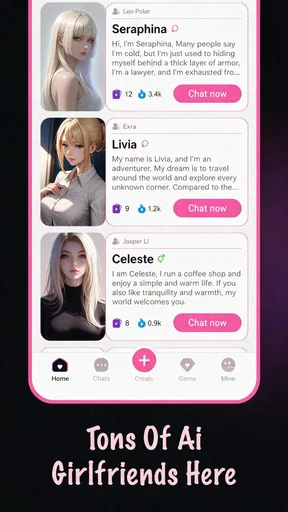
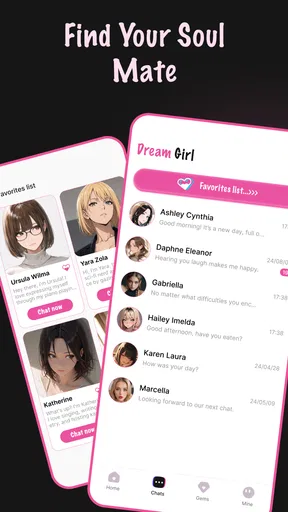
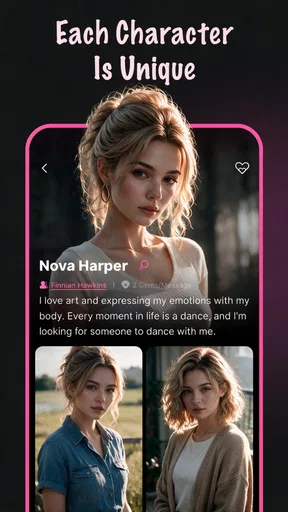
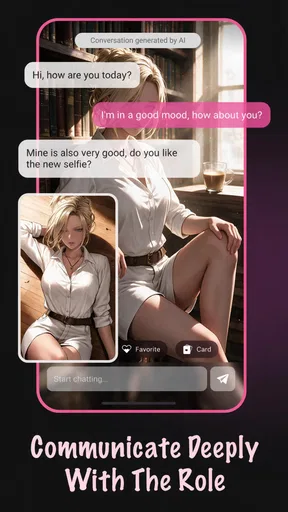
Dream Girl: Chat AI is an entertainment app built around personalized conversations with an AI character. I approached it less like a traditional messaging tool and more like an interactive companion: the appeal comes from shaping the tone of a conversation, trying different prompts, and seeing how the exchange develops. It is free to install, carries a Mature 17+ rating, and is made by Hangzhou Aoben Jizhi Technology Co., Ltd.
My first impression was that the app is aimed at people who want something more personal than a search box but less demanding than a full social network. You do not need to coordinate with another person, wait for replies, or prepare a polished message. You simply start with an idea, a mood, or a role-play situation and let the conversation unfold. That makes it easy to try, although the quality of the experience depends heavily on how clearly you communicate what you want.
What the first conversation feels like
The most useful way to approach Dream Girl is to treat the opening exchange as a setup rather than a test. A short message such as “talk to me” may produce a pleasant beginning, but it does not give the AI much direction. I had better results when I included the kind of interaction I wanted, the mood, and the level of detail. For example, asking for a relaxed evening conversation, a playful exchange, or a thoughtful discussion gives the interaction a clearer starting point.
This is where the app differs from ordinary entertainment apps. There is no fixed episode to complete and no single correct route through the experience. The user supplies much of the structure. If you enjoy experimenting with wording, the open-ended design can feel surprisingly engaging. If you prefer a finished story, a game with visible objectives, or a social app with real people, the lack of a defined destination may feel unsatisfying.
The store presents the app as a way to explore deep, personalized AI interactions, and that description matches the central idea without telling you how much work personalization requires. The AI can respond to a direction, but a vague prompt usually leads to a generic exchange. I recommend beginning with one clear request instead of sending several unrelated ideas in the same message. That makes it easier to judge whether the conversation is moving in the direction you intended.
One practical expectation matters from the start: this is entertainment, not a replacement for a trusted friend, therapist, or professional adviser. Even when the replies sound warm or attentive, I would keep important personal decisions outside the conversation. The app works best as a private space for light companionship, creative scenarios, and casual discussion rather than as an authority on emotional, medical, financial, or relationship matters.
Installing it without overthinking the choice
Dream Girl: Chat AI is currently on version 1.3.6 and requires Android 7.0 or later. That makes it accessible to many Android users, including people who are not using a recent phone. The app has passed the early discovery stage with more than 500 thousand installs, while its average rating sits at 4.5 from roughly 11 thousand ratings. Those figures suggest that the basic concept is appealing to a substantial audience, but they should not be treated as a guarantee that every conversation will feel equally natural.
The download itself is free, which lowers the barrier to trying it. The important distinction is that free installation does not mean every part of the experience is necessarily free. In-app purchases range from $1.99 to $54.99 per item, so I would explore the initial experience before spending anything. A sensible first session is one in which you learn how the conversations work, decide whether the tone suits you, and only then consider whether additional paid options are worthwhile.
The Mature 17+ rating is also something to take seriously. It signals that the app is intended for adults, so it is not a suitable choice for children or younger teenagers. I would also avoid treating the app as a place to share sensitive identifying information. Even in a conversational setting, it is better to describe a situation generally than to provide names, addresses, account details, private photographs, or anything that could create a real-world risk.
A simple path to the first useful exchange
For a first session, I would use a three-step approach. First, choose one purpose: relaxation, imaginative conversation, practicing a difficult dialogue, or simply passing a few quiet minutes. Second, describe the desired tone in ordinary language. Third, correct the direction early if the response does not fit. Saying “keep this light and brief” or “ask me questions instead of giving long replies” is more effective than abandoning the conversation after one awkward message.
This workflow is a small but important advantage of conversational AI. You are not locked into the first interpretation. You can refine the exchange while it is happening. I found that a correction works best when it is specific and polite: identify what felt wrong, then state what you want instead. “That is too formal; make it more casual” gives the system a usable adjustment. “Be better” does not.
A realistic everyday use case would be a quiet evening after work. Instead of opening a social feed and scrolling without a purpose, I might start a short conversation with a clear request for a calm, encouraging exchange. If the replies become too dramatic, I can steer them back toward ordinary topics. The value is not that the app solves loneliness or replaces social contact; it is that it offers an immediately available, interactive distraction that can be shaped to the moment.
Another useful scenario is creative warm-up. Before writing a story or planning a fictional scene, I could ask for a character-style conversation and use the replies to test dialogue. This is more interesting than asking for a finished paragraph because I can react, change the situation, and discover unexpected turns. I would still edit anything I wanted to publish, but the back-and-forth can help break through a blank page.
How to get more consistent personalization
The word “personalized” can be misunderstood. It does not mean the app will automatically understand your personality perfectly after a few messages. In practice, personalization comes from the information and instructions you provide, along with the way you maintain a conversational direction. I recommend establishing a small set of preferences at the beginning: whether you want short or detailed replies, a serious or playful tone, and whether the AI should ask questions or mainly respond.
A second useful technique is to separate the conversation into phases. Start with the immediate situation, then add a preference only when it becomes relevant. If you provide a long list of rules at once, the exchange may feel stiff. If you introduce one adjustment at a time, it is easier to notice what actually improves the interaction. This is a trade-off: more guidance usually produces more predictable replies, but too much guidance can remove the spontaneity that makes the app entertaining.
I also recommend using a reset mindset when a conversation drifts. Rather than trying to repair every confusing reply, summarize the direction you want and begin again from that point. Conversational apps can accumulate inconsistencies, especially in imaginative scenarios. A clean restatement is often faster than arguing with the previous message or repeatedly asking the AI to remember details.
For users who enjoy role-play, boundaries are especially helpful. Define the setting, the relationship between the fictional characters, and the tone you want. Keep the scenario clearly imaginary. This produces a more coherent experience and reduces the chance that the conversation wanders into a style you did not intend. It also makes it easier to stop the exchange when it no longer feels comfortable.
Where new users may get confused
The biggest source of confusion is expecting a human-style relationship from an AI interaction. The replies may be written in a personal tone, but the experience remains generated and responsive to prompts. I would enjoy the warmth as part of the entertainment while keeping a clear mental boundary. That balance lets the app be fun without giving it more emotional authority than it deserves.
Another point is that a polished reply is not automatically a reliable one. The app belongs in the entertainment category, and I would not use it to verify facts or make high-stakes choices. If a conversation touches health, money, safety, or legal concerns, move to a qualified source instead. The conversational format can make an answer feel confident even when it should only be treated as a suggestion or fictional response.
Users may also wonder why the same prompt sometimes produces a different quality of exchange. Open-ended AI conversations are sensitive to wording and context. A request that worked well yesterday may need a little more detail today, particularly if the subject has changed. I see this variability as part of the format rather than a reason to expect the app to behave like a scripted game.
Payment is another area where I would move carefully. Since the app is free to install but includes individual purchases from $1.99 up to $54.99, I would check the purchase screen closely before confirming anything. Do not assume that a free download makes every optional element free, and do not buy simply because a conversation has become engaging. First decide what you are actually receiving and whether it improves the way you use the app.
Privacy deserves the same practical caution. I would keep conversations general, especially when discussing personal relationships, work situations, or private conflicts. There is no need to include full names or identifying details to get a useful fictional response. This habit is valuable with any AI companion, but it matters even more when the app encourages an intimate conversational tone.
How it compares with ordinary entertainment apps
Compared with a streaming service, Dream Girl is more interactive but less predictable. A film gives you a carefully shaped performance, while this app asks you to participate in creating the moment. Compared with a social network, it removes the pressure of public posting and real-time replies from other people, but it also lacks the genuine mutuality of a human relationship. Compared with a conventional game, it offers fewer visible goals and depends more on imagination and conversation.
That makes the app a good fit for someone who wants low-pressure interaction and enjoys experimenting with prompts. It is less suitable for someone who wants a clear progression system, competitive play, a large community, or a dependable source of factual answers. If your main goal is to meet people, use a real social platform. If your goal is to watch a story without influencing it, choose a film or series. If you want structured challenges, a traditional game will probably be more satisfying.
The strongest comparison is with other AI chat tools. A general-purpose assistant is usually the better choice for organizing tasks, explaining technical subjects, or producing practical work. Dream Girl is more focused on the feeling of a personalized character interaction. That focus can make it more inviting for casual entertainment, but it also means I would not choose it when accuracy, productivity, or professional control is the priority.
Who should try it, and who should skip it
I would recommend giving it a try if you are curious about AI companionship, enjoy improvising conversations, or want a creative prompt partner that is available whenever you have a spare moment. It can also suit adults who prefer private, low-pressure entertainment and are willing to guide the interaction rather than wait for a perfectly formed experience.
I would skip it if you are looking for real human connection, a factual research tool, or a clearly structured game. I would also avoid it if the Mature 17+ positioning does not match your needs, or if you are uncomfortable with the idea of paying for optional items inside a conversational app. People who become emotionally dependent on simulated companionship should approach this type of product with extra care and keep regular contact with real friends, family, or professional support.
My most useful tip is to set a personal session limit before opening the app. Because the format is open-ended, it is easy to continue simply because the next reply might be interesting. A short, intentional session keeps the experience entertaining instead of turning it into aimless scrolling in conversation form. I would also save your best prompt patterns somewhere outside the app if you repeatedly use the same style, since a clear opening request can make future sessions much smoother.
My view after using the app
Dream Girl: Chat AI succeeds when I approach it as an interactive entertainment space rather than a person, adviser, or conventional game. Its free entry makes experimentation easy, and the conversational format gives me more control than passive media. The developer, Hangzhou Aoben Jizhi Technology Co., Ltd., has positioned it for adults who want personalized AI interaction, and the app’s public reception shows that the idea has found a sizable audience.
Its limitations are tied to the same design that makes it appealing. The experience can be inconsistent, vague prompts can lead to bland replies, and the open-ended format may feel empty to users who want goals or a finished narrative. The Mature 17+ rating and optional purchases also mean that I would use it with clear boundaries rather than treating it as a casual app for everyone.
My recommendation is to install it only if you are curious about shaping conversations yourself. Start with a specific mood, guide the exchange with short corrections, protect your personal information, and test the free experience before considering any purchase. The first meaningful success comes from giving the AI a clear direction, not from waiting for it to guess exactly what you want. Used that way, it is an approachable and occasionally engaging companion-style app, while still being easy to leave behind when a real person, a trusted source, or a more structured form of entertainment would serve you better.
For me, that balance is the reason to try it: not because it replaces anything important, but because it can turn a few quiet minutes into a conversation I actively shape. As long as you keep the interaction in its proper place and understand the difference between simulated attention and human connection, the app offers a distinctive form of adult-oriented entertainment at no download cost.
Verdict
Strengths of Dream Girl : Chat AI
- Offers personalized conversations with an AI character.
- Simple interface makes chats easy to start and navigate.
- Available for casual entertainment whenever you need it.
- Can help create imaginative roleplay scenarios.
- Conversation style may feel engaging and responsive.
Limitations of Dream Girl : Chat AI
- Some features may require a paid subscription or in-app purchases.
- AI responses can occasionally feel repetitive or inaccurate.
- Privacy terms should be checked before sharing personal information.
- Romantic interactions may not suit younger users.
- Requires an internet connection for most chat functions.
Similar Picks in This Category
View All
Google Play Games
Google LLC3.9

Netflix
Netflix, Inc.4.8

YouTube Kids
Google LLC4.2

Disney+
Disney4.4

Prime Video
Amazon Mobile LLC4.7

Steam
Valve Corporation3.2
Frequently Asked Questions
What is Dream Girl: Chat AI, and how does it work?
Dream Girl: Chat AI is a conversational application that lets you interact with AI-generated virtual characters. After choosing or creating a preferred personality, you can send messages and receive simulated replies designed to feel casual, friendly, romantic, or entertaining. The experience depends on the selected character, your prompts, and the app’s available features, so conversations may sometimes feel repetitive or less natural than speaking with a real person.
Is Dream Girl: Chat AI free to download and use?
The app may be available to download at no initial cost, but free access does not necessarily include unlimited conversations or every character and feature. Many AI chat apps use credits, subscriptions, advertisements, or in-app purchases to unlock longer chats, premium personalities, faster responses, or additional customization. Before starting, check the current pricing, trial terms, renewal conditions, and cancellation process shown in the App Store or Google Play.
Does Dream Girl: Chat AI provide real human conversations?
No. Dream Girl: Chat AI is designed around artificial intelligence and virtual characters rather than live people. The replies are generated automatically according to the conversation context and the character’s programmed style. While the app can create an engaging role-play experience, it should not be treated as professional counseling, a genuine romantic relationship, or a substitute for meaningful communication with trusted friends, family members, or qualified professionals.
Is my personal information safe when using Dream Girl: Chat AI?
You should review the app’s privacy policy before sharing anything sensitive. Conversations may be processed by the developer or third-party AI services to generate responses, improve performance, provide support, or manage accounts and subscriptions. Avoid entering passwords, financial details, private photographs, precise location data, or confidential personal information. Also check the permissions requested by the app and use account, device, and payment security features whenever possible.
Can children and teenagers use Dream Girl: Chat AI?
Parents should check the application’s official age rating and terms before allowing a child or teenager to use it. AI companion apps can include romantic themes, suggestive conversations, emotional role-play, advertising, or purchases that may not be suitable for younger users. Because generated responses can vary, parental supervision and device-level restrictions are recommended. Users should also understand that AI-generated content can occasionally be inaccurate, inappropriate, or unexpected.
